 Bahasa Indonesia
 English

UNY Assists High School Teachers in Developing Differentiated Assessment Instruments
Submitted by admin on Mon, 2026-07-13 12:07
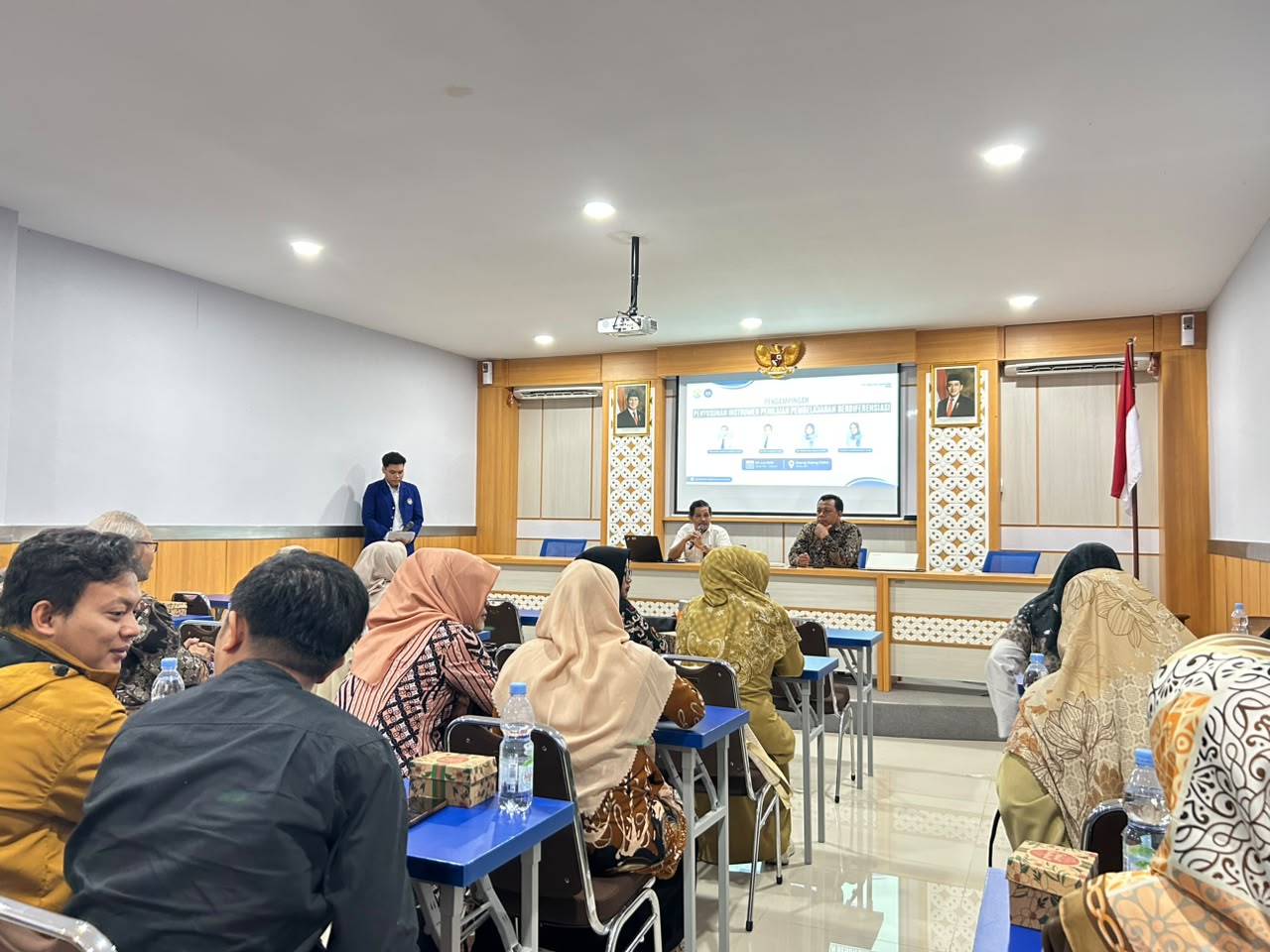
YOGYAKARTA – A team of lecturers from the Department of Physics Education, Universitas Negeri Yogyakarta (UNY), conducted a mentoring program on the development of differentiated assessment instruments for senior high school teachers who are members of the Physics Teachers' Subject Forum (MGMP) of Yogyakarta City. The program was held at the meeting room of the Department of Physics Education, UNY, on Monday (July 6, 2026).
This community service program aimed to strengthen teachers' competencies in developing adaptive, valid, and reliable assessment instruments that accommodate students' diverse learning needs.
The Head of the UNY Physics Education Assessment and Evaluation Research Group, Supahar, stated that the program also served as an opportunity to strengthen collaboration among members of the Physics MGMP throughout Yogyakarta City while enhancing their understanding of assessment development, which continues to evolve alongside advances in teaching and learning strategies.
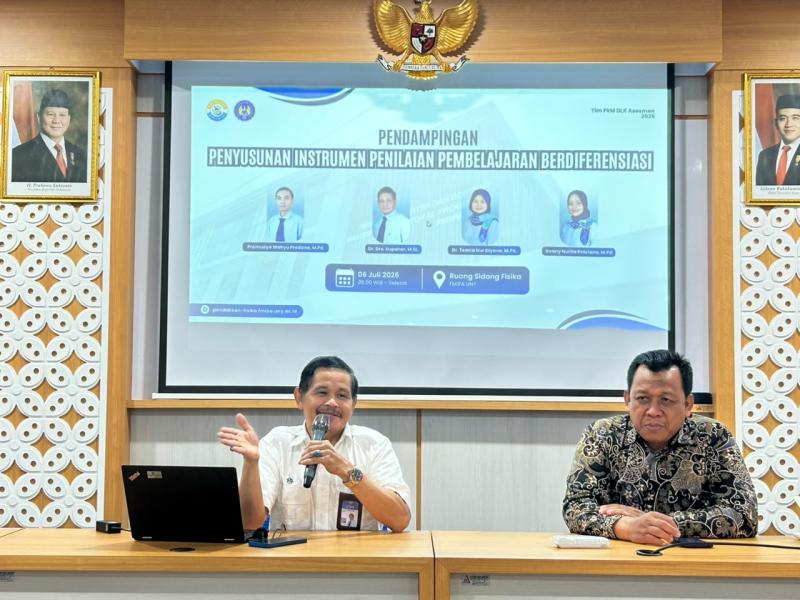
"Assessment development must be aligned with the instructional methods being implemented. One important strategy is the use of pre-assessment or initial assessment as a basis for designing instruction that addresses students' individual learning needs," he said.
The program was initiated in response to the continued predominance of assessment practices focused solely on assigning final scores. Such practices have not yet functioned optimally as diagnostic tools for identifying the diverse levels of students' readiness and learning needs, particularly in heterogeneous classrooms.
Pramudya Wahyu Pradana, a lecturer in the Department of Physics Education at UNY, explained that the mentoring program was designed to enhance teachers' understanding of differentiated assessment concepts that align with differentiated instruction. Participants were also guided in conducting self-assessments of the assessment instruments they had previously used in their classrooms. The objective was to enable teachers to revise their instruments in accordance with the standards of differentiated assessment, including assessment blueprints, analytic rubrics, and feedback mechanisms that effectively support students' learning progress.
According to him, the program's tangible outputs include a comprehensive package of differentiated assessment instruments, consisting of tiered assessment questions or alternative assignment options, analytic rubrics, and implementation guidelines that can be directly applied in classroom teaching.
The program also contributes to the achievement of the Sustainable Development Goals (SDGs), particularly SDG 4 (Quality Education), by improving the quality of assessment practices to make them more inclusive, equitable, and effective. Furthermore, the collaboration among the university, schools, the MGMP, and other educational stakeholders supports SDG 17 (Partnerships for the Goals) by fostering stronger institutional partnerships.
_0.jpeg)
Tsania Nur Diyana, another lecturer in the Department of Physics Education at UNY, added that the program also contributes to improving the university's performance indicators by involving undergraduate students as members of the community service team, practice facilitators, and technical support personnel.
"This collaboration strengthens lecturers' roles in community engagement in accordance with their expertise in educational assessment and evaluation while fostering more productive and sustainable partnerships between universities and schools. Moving forward, we are also preparing a formal cooperation agreement and follow-up action plan to ensure the sustainability of the program," she said.
The community service team consisted of Pramudya Wahyu Pradana, Supahar, Tsania Nur Diyana, Irvany Nurita Pebriana, and student members Agil Lia Saputri, Yuliani Hidayah, Wahyu Nuraini, Aisyah Putri, and Andri Nur Cahyo.
Through this mentoring program, teachers are expected to become more capable of implementing assessments that are responsive to students' learning needs, thereby contributing to more equitable and sustainable improvements in the quality of senior high school education.
English
Program Studi Fisika
Departemen Pendidikan Fisika
FMIPA Universitas Negeri Yogyakarta
Kampus Karangmalang Yogyakarta 55281
Telepon dan fax (0274) 550847
Email: fisika@uny.ac.id